
Wanton
"Female freedom always means sexual freedom"

18 months after my only son died, I bought a dilapidated century-old house in a dilapidated corner of the province. The mint-green aluminum-siding clad house, long since divested of its heritage qualities, sits meters from a highway running east to west in the bottom of the province. Logging trucks and transport trucks and RVs rumble past the doorway. The charm of the house, I suppose, was the half-acre of grass and over-grown gardens that surround the house. That, and the bottom-of-the-barrel price.
It was cheap, I was lost, we were perfect for each other.
Buying a house is a big decision. Most people do so to mark a positive transition in their lives—like a marriage or the beginning of a family. I bought my first house newly childless, leaving behind my 9-year relationship with a man I loved but was growing increasingly distant from.
Not doing things the proper way has been defining feature of my life. In fact, I come from a long line of disobedient, wayward women. From my single-mother great-great grandmother, down to my mother, also a single parent, we have tended to live life on our own terms, unattached to the men in our lives, if necessary.
*
The etymology of wanton comes from the middle English wan-towen, literally, resistant to control; willful. Wan meant wanting or lacking, much like modern-day prefix un-.
Towen comes from the past particle of Old English teon, to train or discipline, and carried the notion of being untrained or ill-brought up. The late 14th century added the element of sexual indulgence, especially when describing women’s sexuality.
About women’s independence, Toni Morrison said the following:
“Female freedom always means sexual freedom, even when—especially when—it is seen through the prism of economic freedom.”
*
But back to me buying this house. It’s true I needed space to grieve my son’s death in my own way and on my own terms. He died of an accidental drug overdose after an eight-year tug-of-war with addiction. So, when he died, I’d already had eight years to grieve his much anticipated death.
Coincidental to my grieving, I started to fantasizing about owning my own place to live. House is an overstatement, for often the dwelling I fantasized about living in might be no fancier than a tent or a rough cabin made from barked logs, with a tarp for a roof. In my fantasy world, the rougher, the more remote, the more dire, the better.
It seemed I wanted and needed to take myself to the end of the world, and there, solitary and alone, do whatever my grief-self needed me to do.
I’ve already talked about my waning, post-grief libido and sex drive in previous pieces, so I won’t bore you with repeating the titillating details, but suffice to say, sex was not a part of my Robinson-Crusoe scenario. And though it indeed has been said that no man is an island, I am not a man.
*
Allow me to illustrate an evening in the mint-green house on the highway, mid-December. I am perhaps at the tail end of my grief with my son’s death. Things in my heart and mind are resolving. Life has brought me new concerns. The break-up with my partner opens an existential void at the centre of my life. I now have new, shinier grief to attend to. It’s all very exciting in weird way. Partners can come back, whereas the dead can’t.
So, I’m trying my damnedest to figure out what I’m doing in the mint-green house and how to patch things up with my former partner. As I ponder this, wet snow slides down the roof and SUVs and logging trucks rush past on their way home from either picking up dead forests or Christmas shopping. I am pretending to work (my new job is boring in the extreme) and watching Time Team on Youtube, which is my go-to binge watch when I am feeling edgy or disconsolate.
Time Team is a British television program that ran for 20 seasons, from 1994 to 2014 (coincidentally, the year I found out my son was doing drugs). It features a group of rag-tag historians and archeologists who carry out archaeological digs in the British Isles. Although, of course, it is scripted, the program gives enough allowance to the archeological team’s characters to allow their odd-ball and disparate accents, idiosyncrasies, and personalities to shine through. It’s the rather scruffy and undisciplined personalities I relate to.
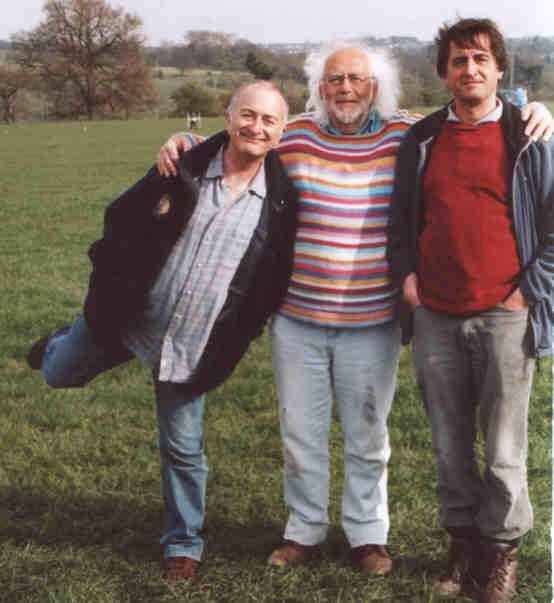
Time Team is easy to watch and largely unemotional. In the first months after my son’s death, I watched endless episodes dozing on the couch while my partner slept alone in our bed.
But back to me in the mint-green house, watching Youtube in the middle of the afternoon, slush from passing vehicles practically spraying the living room window.
It’s three o’clock and dark outside. Phil, one of the archeologists, is scraping away at some acidic soil on a Cornish heath in a rain-storm, and I have my hand slid down under the waist band of my jeans. I am trying to revive my libido by hand. On my own terms. I’m working diligently (which is an aspect of my personality), but I am distracted by Phil finding of a piece of neolithic flint, and anyways, whatever I am doing is not working, orgasm-wise anyway.
I change tactics, pausing the video and allowing my mind’s eye to conjure an erotic situation suitable for the occasion. Most of my previous preoccupations fail to excite. Ditto with pornography (too many pale projectiles thrusting into pink orifices). I allow my mind to settle on my former partner. It’s a risky move on my part, because although I desire him, my desire is bound up in wanting, and that is somehow disempowering for me, and anyway can make me feel plain sad.
Instead I conjure up the sexual partner I imagine my former partner to be fucking.
She is much of what I am not. She has perky breasts; mine tend toward post-breastfeeding floppiness. She has copious, frilly labia, exotically dark, shortly-trimmed pubic hair; my labia, peri-menopausal and thinning, protrude through scrappy, pale hair.
I am the plain, sad, waspish vision of her (my middle name is Jane), and she is the young, fuck-able and vibrant version of myself. And my former partner is lusting after her, is fucking her, is entering her, and this is finally what makes me cum.
*
I think what Toni Morrison meant when she highlighted the economic aspect of women’s freedom is how much sexuality has to do with independence. Owning my own house (as shitty as the house may be), has been a way of owning myself. My experience. My grief.
If time could travel backward (Time Team scraping away at the earth and revealing layer upon layer of what and who used to exist), I could have bought this house before my son died. I could have brought him here and possibly saved him. I think about this every day. If only I could have had more time with him. Another chance.
Now, I own my sexuality in my own house. I sit with it and feed it the version of myself it wants to own. It wants vibrancy and exoticism. It wants happiness. It turns over on its back in bed and runs its hands over the breasts and hard nipples, taut against my rib-cage. It understands time to be fluid, I am not as old as I think.
It wants the impossible and the real at the same time. It wants fucking and sex and second chances. It wants whatever is possible in life, which death does not permit.

Thought provoking and well written. I hope you find peace for yourself - but then perhaps it won't be as interesting to read. Prove me wrong?
Thanks for writing this.